Back to work Client Work
Taipower Laboratory Information Management System (LIMS)
A 250+ page laboratory management interface built for high-volume experimental data
- 250+
- Pages
- 6
- Functional modules
- 3
- Dual-card layout controls
Background & Challenge
This is the front-end prototype for the laboratory information management system of Taipower Research Institute’s chemical testing division, spanning case, test, result, report, resource, and customer-service modules — more than 250 pages in total. The division’s daily work revolves around large volumes of experimental data and dense paper-based audit forms, and the client’s core requirement came down to a single sentence: “Let us see as much data as possible on one screen.” I was responsible for the UI/UX design and front-end implementation of the entire interface, hand-coded in HTML / CSS / SCSS with jQuery, on top of Bootstrap 5 and Tabler as the base component libraries.
Throughout the project I designed around one guiding principle: give the space back to the data, and give the choice back to the user.
Design Decisions
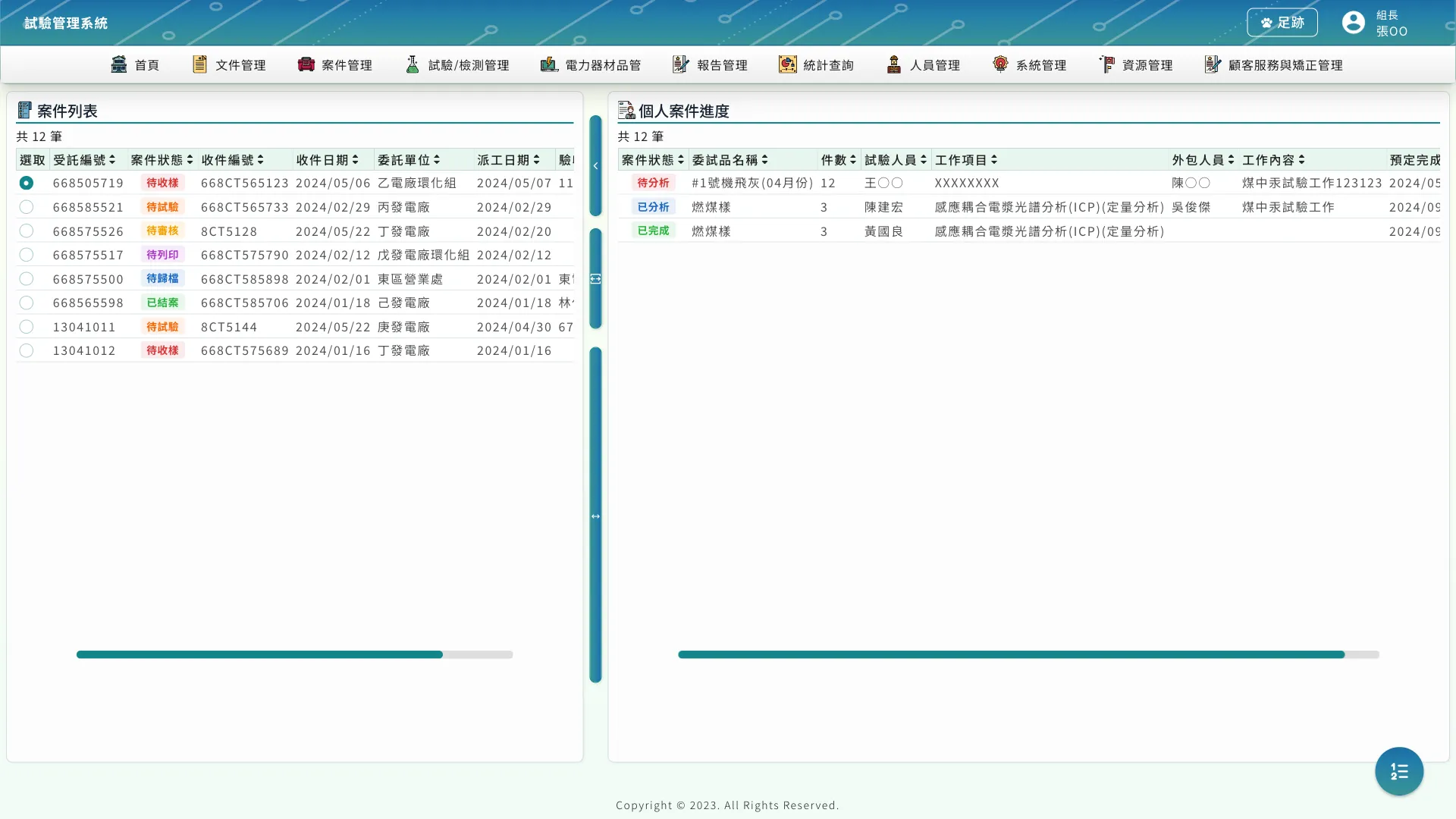
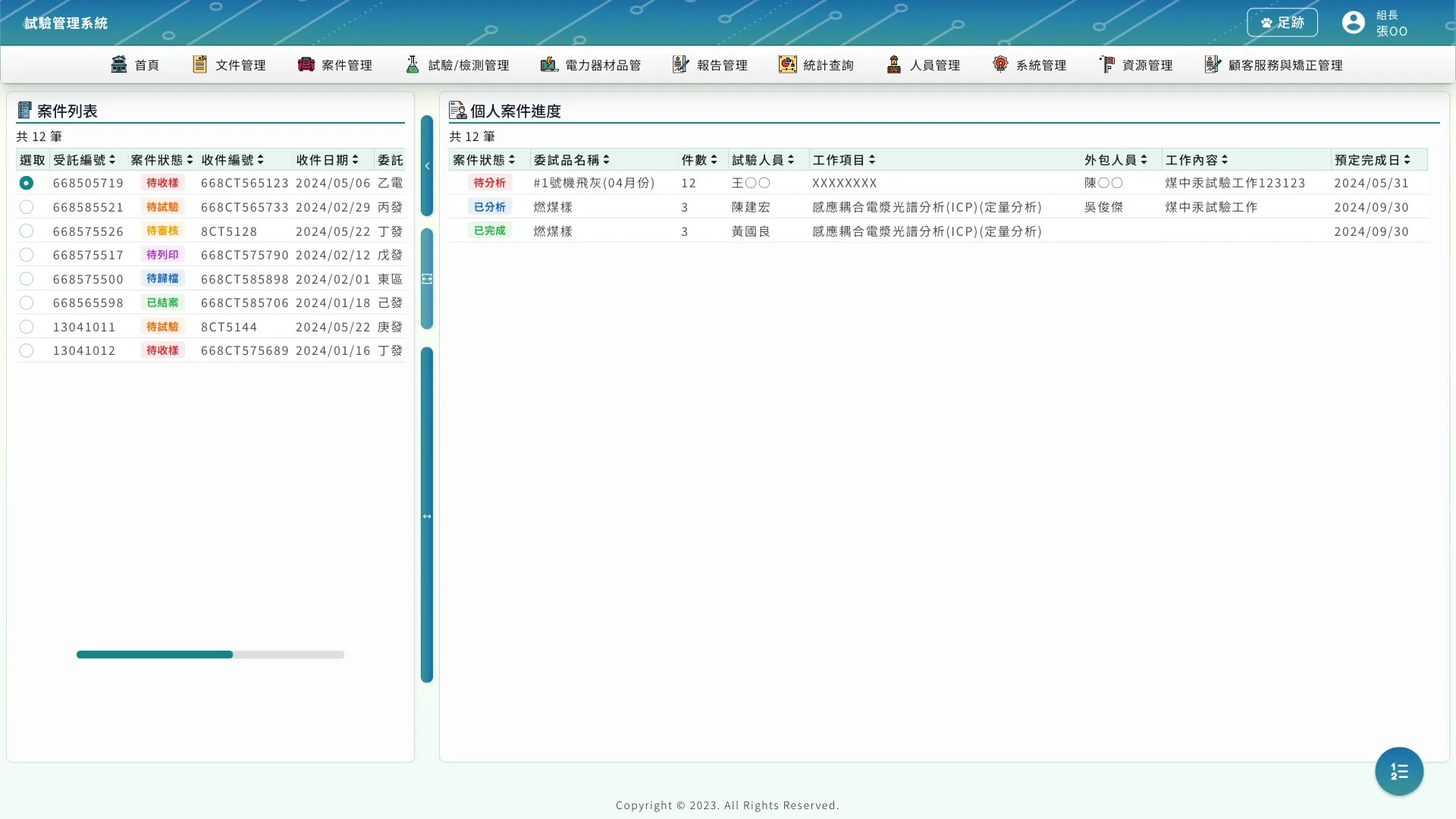
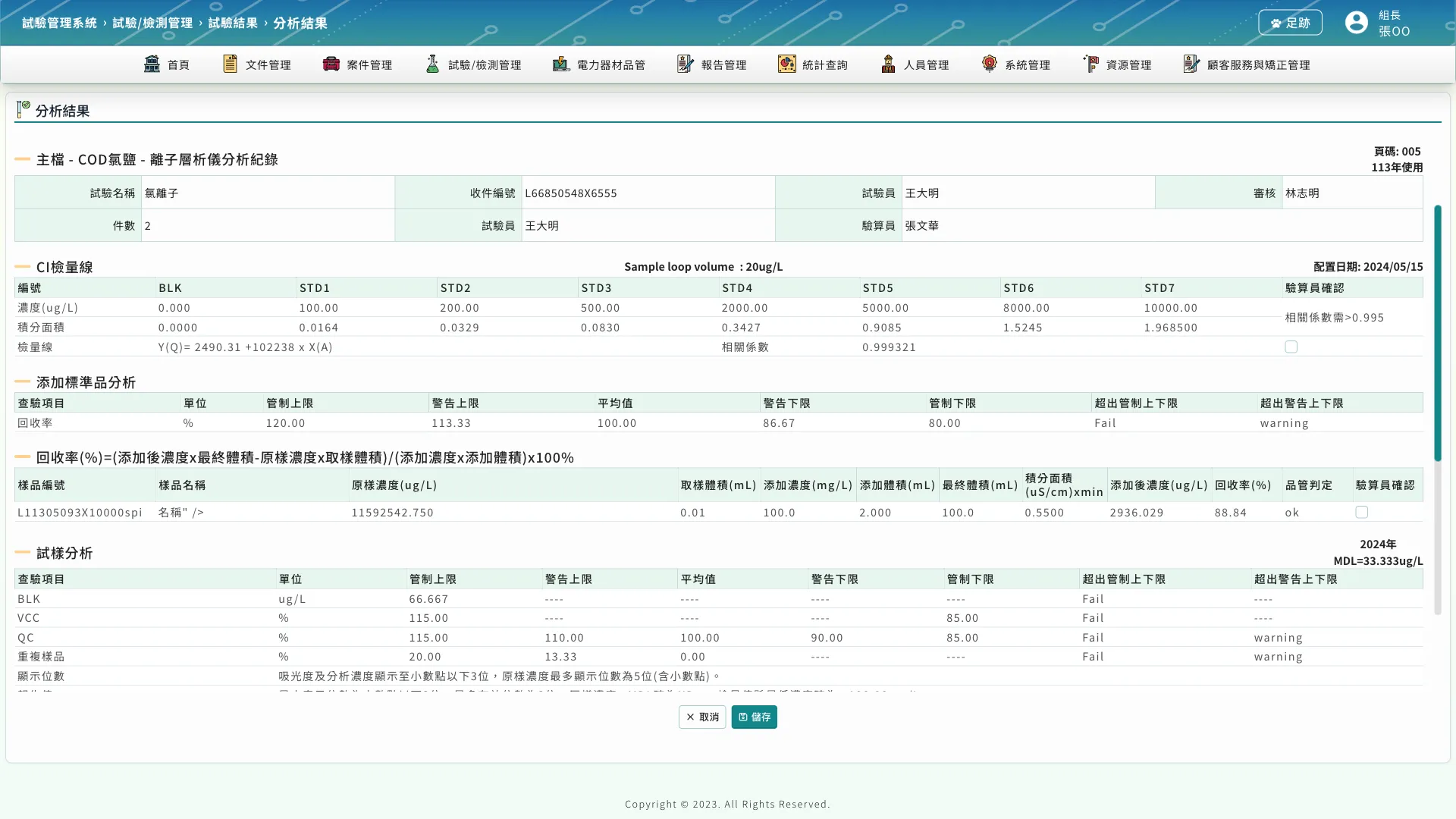
Two further layout decisions serve the same goal: maximizing the height of the data area.
Outcome & Reflections
The final delivery covered the modules above — a front-end prototype of more than 250 pages — plus a design guideline document unifying empty states, dialogs, and toast behavior. Due to a non-disclosure agreement, every screen shown on this page has been de-identified.
This project taught me to treat information density as a design problem in its own right: not shrinking text to cram more in, but using flexible layouts and componentization so users decide how much they want to see at any given moment. It also confirmed that at the scale of 250+ pages, a systematic style architecture is not a matter of engineering efficiency — it is the precondition for design consistency to survive.